

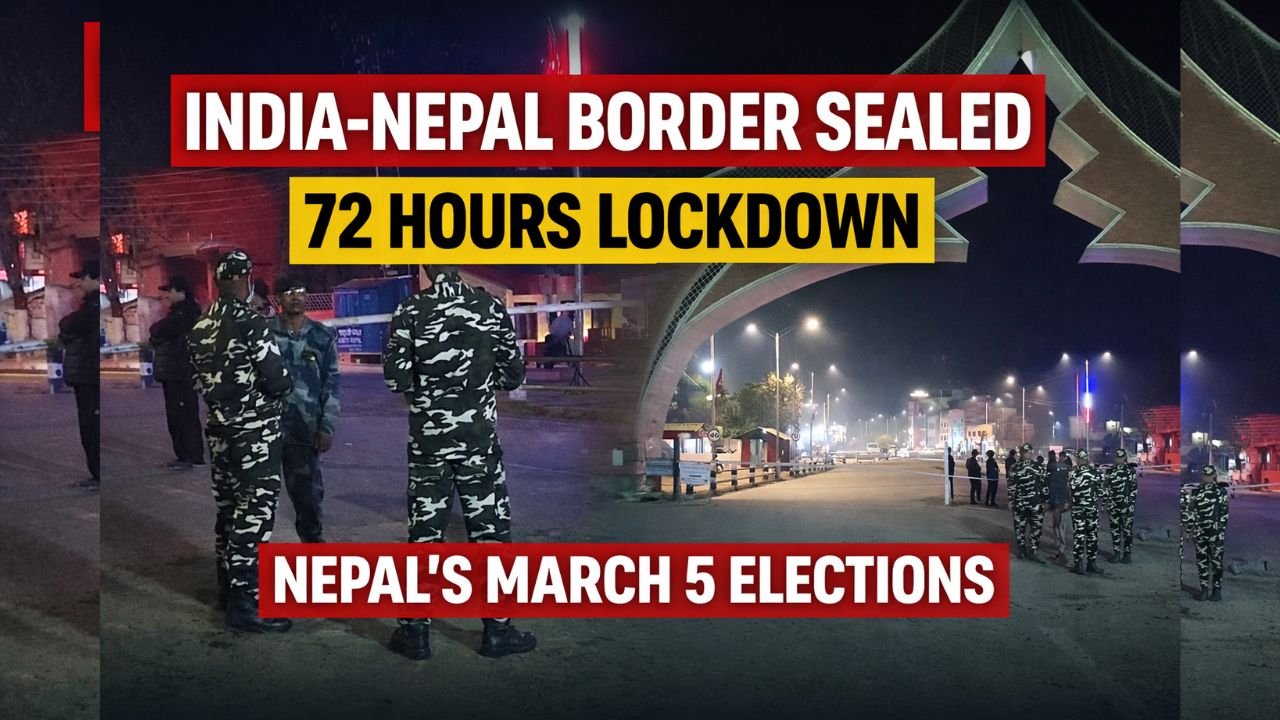

India–Nepal Border Sealed for 72 Hours Ahead of Nepal’s March 5 Elections
India–Nepal Border Sealed for 72 Hours Ahead of Nepal’s March 5 Elections
India–Nepal border: Ahead of Nepal’s parliamentary elections scheduled for March 5, 2026, authorities in both Nepal and India have temporarily sealed the India–Nepal international border for 72 hours as a precautionary security measure.
The border closure came into effect at 12:00 AM on March 2, 2026, and will remain in place until 12:00 AM on March 5, 2026.
The decision was taken following a formal request from Nepali district authorities, including officials from Kanchanpur (Mahendranagar), Nepal, who sought temporary movement restrictions to ensure peaceful, fair, and orderly elections.
Districts on Alert in Uttar Pradesh
In Uttar Pradesh, several border districts have been placed under heightened security. These include:
-
Maharajganj
-
Pilibhit
-
Siddharthnagar
-
Bahraich
-
Shravasti
In Maharajganj, which shares approximately 84 kilometers of open border with Nepal, security forces have intensified patrols. Personnel from the Sashastra Seema Bal (SSB) and local police have been deployed at major checkpoints and sensitive locations.
Officials confirmed that all authorized and unauthorized routes, including small trails and rural crossing points, are under strict surveillance.
Bihar Border Districts Also Under Tight Monitoring
In Bihar, security has been strengthened in key border districts such as:
-
East Champaran (Raxaul)
-
Sitamarhi
-
Madhubani
-
Araria
-
Kishanganj
-
Supaul
Authorities in these regions have restricted cross-border civilian movement, except for emergency and essential services.
Administrative Directives from Indian Authorities
According to local administrative sources, district magistrates (DMs) and senior police officials across border districts have issued directives to:
-
Intensify patrolling
-
Seal informal crossing points
-
Monitor border markets
-
Prevent illegal movement
-
Maintain law and order
In several districts, coordination meetings were held between the District Magistrate (DM), Superintendent of Police (SP), Sub-Divisional Magistrates (SDM), and SSB Commandants to ensure seamless implementation of the order.
Security forces are also using CCTV monitoring at major border entry points.
India–Nepal border: What Movement Is Allowed?
While general public movement has been restricted, authorities have clarified that:
-
Medical emergencies
-
Ambulance services
-
Essential goods transport
-
Government-authorized travel
will continue without interruption.
Why Is Border Sealing Necessary During Elections?
Although India and Nepal share an open-border arrangement allowing visa-free travel for citizens, temporary sealing during elections is a standard practice.
The measure helps prevent:
-
Cross-border political interference
-
Movement of disruptive elements
-
Smuggling of illegal arms or cash
-
Election-related disturbances
Such restrictions have been implemented during previous elections in both countries as well.
Impact on Local Border Areas
India–Nepal border: Border markets, daily wage workers, and small traders may experience temporary inconvenience. However, officials emphasize that the step is necessary to ensure a peaceful democratic process in Nepal.
Security agencies have stated that the border will reopen immediately after the election process concludes and stability is confirmed.
The temporary sealing of the India–Nepal border highlights the strong coordination between both nations in safeguarding democratic processes.
With Nepal heading to the polls on March 5, enhanced vigilance along the border reflects the seriousness with which authorities are approaching election security.