
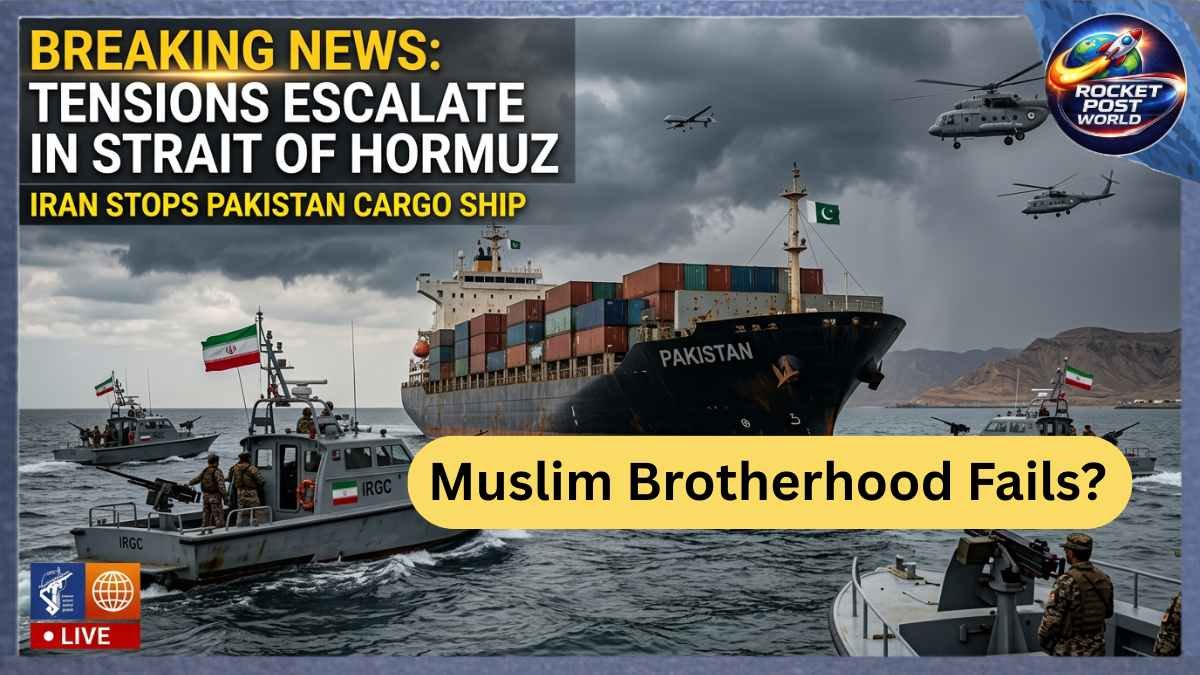
Iran-US War: Amid escalating tensions in the Middle East, a major geopolitical development has raised serious questions over Pakistan’s diplomatic positioning. Iran has blocked a Pakistani-bound ship in the Strait of Hormuz, despite Islamabad’s attempts to act as a mediator. The move highlights the harsh ground reality behind political narratives like “Muslim Brotherhood” and signals a deepening global energy crisis.
Iran Blocks Pakistani Ship in Hormuz
Iran’s Islamic Revolutionary Guard Corps (IRGC) stopped a vessel named “Selen”, which was heading towards Karachi, from crossing the Strait of Hormuz.
IRGC Navy Commander Alireza Tangsiri stated that the ship did not have the required permission to pass through the strategic waterway. He added that all vessels must now seek prior approval from Iranian authorities before transit.
Pakistan’s Mediation Efforts Take a Hit
This incident comes at a time when Pakistan is trying to position itself as a mediator in the ongoing conflict.
Just a day before the incident, Pakistani Prime Minister Shehbaz Sharif held a phone conversation with Iranian President Masoud Pezeshkian.
Despite diplomatic outreach, Iran’s action suggests that on-ground strategic decisions are overriding political engagements.
India’s Oil Tankers Pass Without Disruption
Interestingly, while Pakistan faced a setback, India managed smooth transit through the same route.
Since the beginning of the conflict, five Indian LPG and oil tankers have successfully crossed the Strait of Hormuz:
-
Jag Vasant
-
Pine Gas
-
Shivalik
-
Nanda Devi
-
Jag Ladki
This indicates that selective access is being granted based on compliance with Iranian conditions.
Iran’s Warning: Follow Rules or Stay Out
Iran has made its position clear — only those ships that are not acting against Iranian interests and comply with its regulations will be allowed passage.
Through its mission at the United Nations, Iran stated that such vessels may use designated “safe routes” under its supervision.
Shipping Activity Collapses, Trade Disrupted
Despite Iran’s statements, the ground reality is alarming.
-
Earlier: Around 120 ships per day used this route
-
Now: Only 4–5 ships daily
This sharp decline shows that maritime trade through Hormuz is nearly paralyzed, raising global concerns.
Global Energy Crisis Looms Large
The Strait of Hormuz is one of the world’s most critical energy corridors.
-
Around 20% of global oil and gas supply passes through it
-
Prolonged disruption could trigger a severe crisis
Experts warn that if tensions persist, oil prices may surge to $150–$200 per barrel, impacting economies worldwide.
Iran-US War: While Pakistan continues to advocate unity among Muslim nations, Iran’s move exposes the limits of such narratives in realpolitik.
The situation in the Strait of Hormuz is no longer just a regional issue — it is rapidly evolving into a global economic and energy crisis.
About the Author