

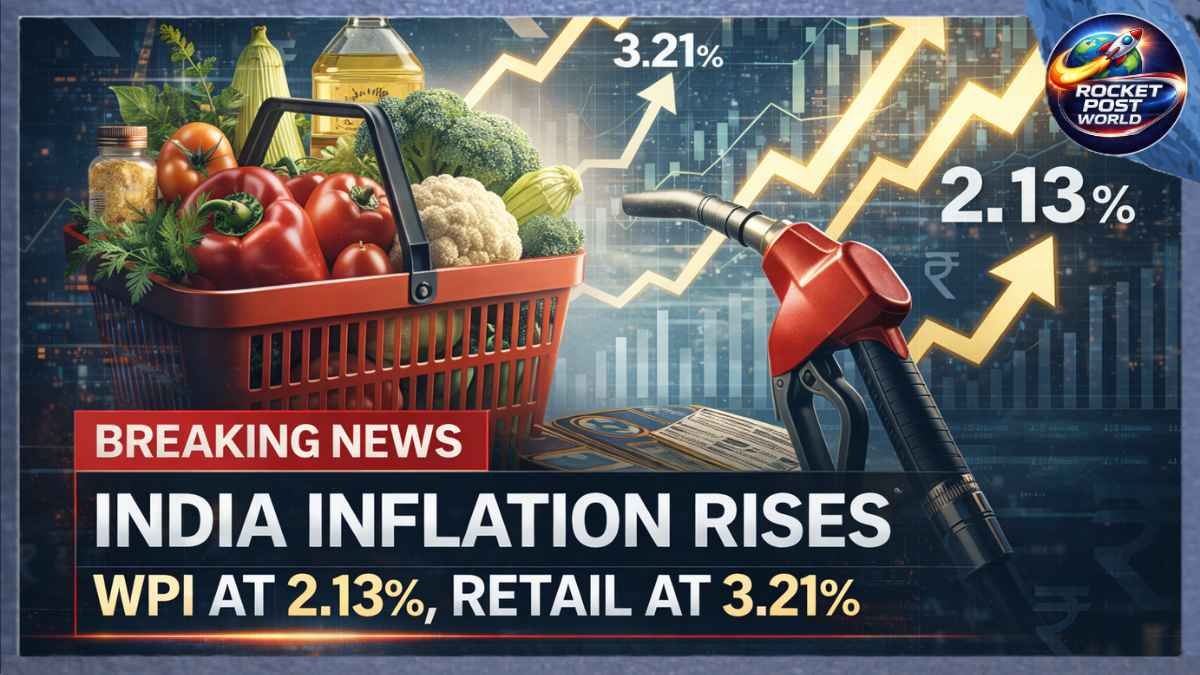
Inflation In India: India’s wholesale inflation rose to 2.13% in February 2026, marking the highest level in the last 12 months. The increase comes after wholesale inflation stood at 1.81% in January and 0.83% in December 2025.
The latest data was released by the **Ministry of Commerce and Industry on March 16. Alongside this, retail inflation also increased to 3.21% in February, compared to 2.74% in January, indicating a gradual rise in prices faced by consumers.
Retail Inflation Trend in FY 2025-26
Data for the financial year 2025-26 shows that retail inflation has fluctuated throughout the year before rising again in the last two months.
Monthly retail inflation rates:
-
April – 3.16%
-
May – 2.82%
-
June – 2.10%
-
July – 1.61%
-
August – 2.07%
-
September – 1.44%
-
October – 0.25%
-
November – 0.71%
-
December – 1.33%
-
January – 2.74%
-
February – 3.21%
The data shows inflation reached its lowest level in October, but has been rising steadily since December.
Wholesale Inflation Trend in FY 2025-26
Wholesale inflation also experienced several fluctuations during the financial year.
Monthly wholesale inflation rates:
-
April – 0.85%
-
May – 0.39%
-
June – –0.13%
-
July – –0.58%
-
August – 0.52%
-
September – 0.13%
-
October – –1.21%
-
November – –0.32%
-
December – 0.83%
-
January – 1.81%
-
February – 2.13%
For several months during the year, wholesale inflation remained in negative territory, but it has accelerated sharply since December.
Prices of Daily Essentials Increase
Several categories of essential goods recorded higher inflation in February:
-
Primary articles inflation rose from 2.21% to 3.27%
-
Food index inflation increased from –1.41% to 1.85%
-
Fuel and power inflation improved slightly from –4.01% to –3.78%
-
Manufactured products inflation increased from 2.86% to 2.92%
The rise suggests that prices of food items, vegetables, grains, and other essential goods have started increasing again.
Oil Prices Could Push Inflation Higher
Experts warn that inflation could rise further if geopolitical tensions escalate in the **Middle East.
If the conflict involving **United States, Israel, and Iran continues for a prolonged period, global crude oil prices could surge to $150 per barrel.
Such an increase could lead to:
-
Higher petrol and diesel prices
-
Rising transportation costs
-
Increased prices for food, vegetables, and daily consumer goods
Major Components of Wholesale Inflation (WPI)
Wholesale inflation in India is calculated using three major categories:
1. Primary Articles
Weight: 22.62%
Includes agricultural products such as:
-
grains
-
vegetables
-
wheat and other food items
2. Fuel and Power
Weight: 13.15%
3. Manufactured Products
Weight: 64.23% (largest share)
Other components include:
-
non-food articles such as oilseeds
-
minerals
-
crude petroleum
How Wholesale Inflation Affects Consumers
If wholesale prices remain high for a long period, industries often pass the higher production costs to consumers. This eventually leads to higher retail prices in the market.
The government can attempt to control inflation mainly through tax adjustments.
For example, in the past, when crude oil prices surged, the government reduced excise duty on fuel to soften the impact.
However, tax reductions can only be implemented within certain limits.
How Inflation Is Measured in India
India tracks inflation through two main indicators:
Retail Inflation (CPI)
Retail inflation reflects the prices paid by consumers in the market. It is measured through the **Consumer Price Index.
Wholesale Inflation (WPI)
Wholesale inflation reflects prices charged between businesses in wholesale markets, measured through the **Wholesale Price Index.
Weight Distribution in CPI
-
Food and products – 45.86%
-
Housing – 10.07%
-
Fuel and other items – remaining share
Weight Distribution in WPI
-
Manufactured products – 63.75%
-
Primary articles – 22.62%
-
Fuel and power – 13.15%
About the Author