
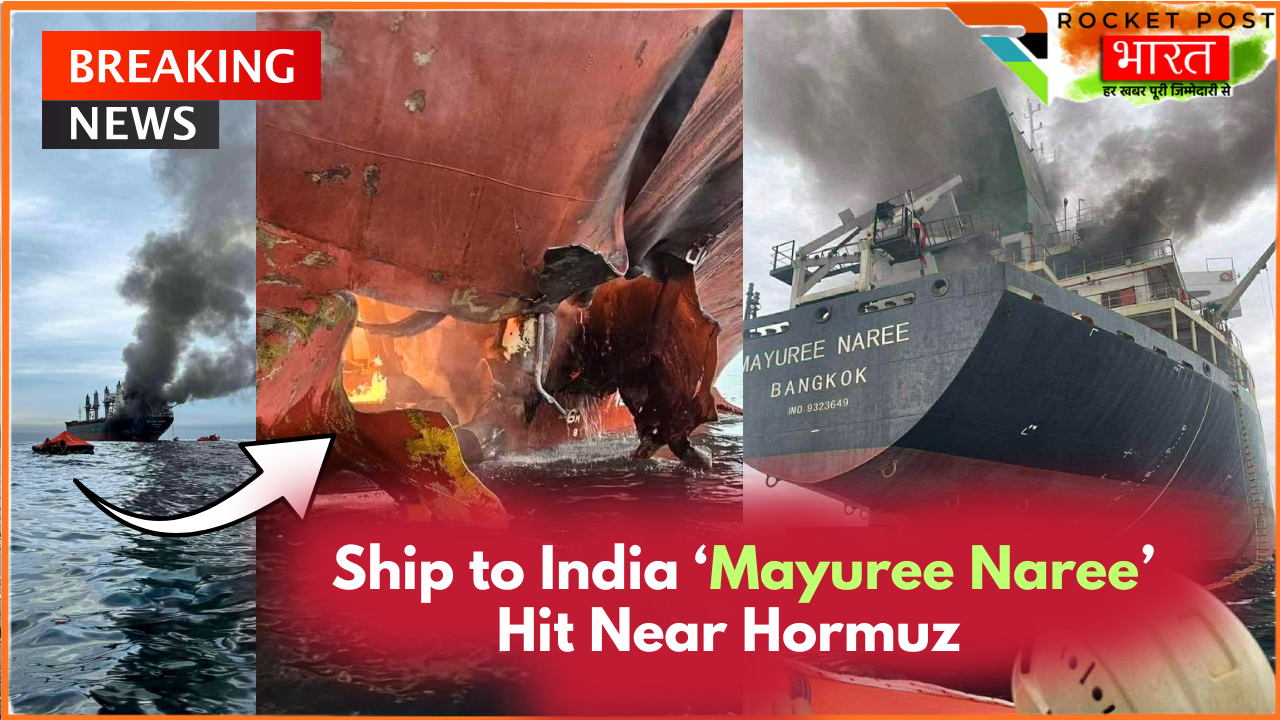
India-Bound Cargo Ship Attacked: Rising tensions in the Middle East are now beginning to impact global shipping routes. In a dramatic incident, a Thailand-flagged cargo ship heading toward India’s Gujarat coast was attacked near the Strait of Hormuz, triggering a fire onboard and forcing the crew to abandon the vessel.
The attack has raised fresh concerns about the safety of commercial shipping in one of the world’s most critical energy corridors, as the wider regional conflict continues to intensify.
Ship Was Heading Toward Gujarat’s Kandla Port
According to reports, the vessel involved in the incident has been identified as “Mayuree Naree,” a bulk cargo ship sailing under the Thai flag.
The ship was carrying cargo toward India and was reportedly bound for Kandla Port in Gujarat when it came under attack while passing through the Strait of Hormuz, a narrow but extremely strategic maritime route connecting the Persian Gulf to the Arabian Sea.
Officials say the ship was hit by two unidentified projectiles, possibly missiles or drones. The impact caused a powerful explosion near the engine section, triggering a fire that quickly spread through parts of the vessel.
Witness reports from nearby ships indicated thick black smoke rising from the cargo vessel shortly after the blast.
20 Crew Members Rescued, 3 Still Missing
Authorities confirmed that 23 crew members were onboard the ship at the time of the attack.
As the fire intensified, the crew was forced to abandon the vessel using lifeboats.
Rescue details so far:
-
20 crew members were successfully evacuated
-
They were rescued by Oman’s naval forces
-
Three crew members remain missing
Initial reports suggest that the missing sailors were likely near the engine room when the projectiles struck, making their survival uncertain.
Search and rescue operations are currently underway in the surrounding waters.
Major Rescue Operation Launched at Sea
Following the distress alert, regional maritime authorities and naval forces initiated an emergency rescue mission.
Ships operating in nearby waters assisted in locating the lifeboats carrying the crew members. Oman’s navy later confirmed that the rescued sailors were safely brought ashore for medical checks and further assistance.
Authorities are also attempting to assess the damage to the vessel and control the fire onboard.
Commercial Ships Increasingly at Risk
Security analysts say the incident highlights a growing concern: commercial vessels are increasingly becoming collateral targets in the escalating Middle East conflict.
Over the past weeks, several maritime alerts have warned shipping companies about potential missile and drone threats in the region.
With tensions escalating between regional powers, shipping routes in the Persian Gulf are now facing heightened security risks.
Why the Strait of Hormuz Is So Critical
The Strait of Hormuz is widely considered one of the most strategically important waterways in the world.
Its importance stems from the fact that:
-
Nearly 20% of the world’s oil supply passes through this narrow corridor
-
It is a vital trade route linking Middle Eastern energy producers with Asia and Europe
-
Major economies including India, China, Japan, and South Korea depend heavily on this route
Any disruption here can immediately impact global energy markets and international shipping operations.
Possible Impact on India and Global Trade
For India, the attack is particularly concerning because a significant portion of its oil imports and cargo shipments travel through the Strait of Hormuz.
If attacks on commercial vessels continue, the consequences could include:
-
Increased shipping insurance costs
-
Higher global oil prices
-
Disruptions in international supply chains
-
Potential rerouting of vessels through longer and more expensive maritime paths
Experts warn that if the regional conflict escalates further, global maritime trade could face serious challenges in the coming weeks.
About the Author