

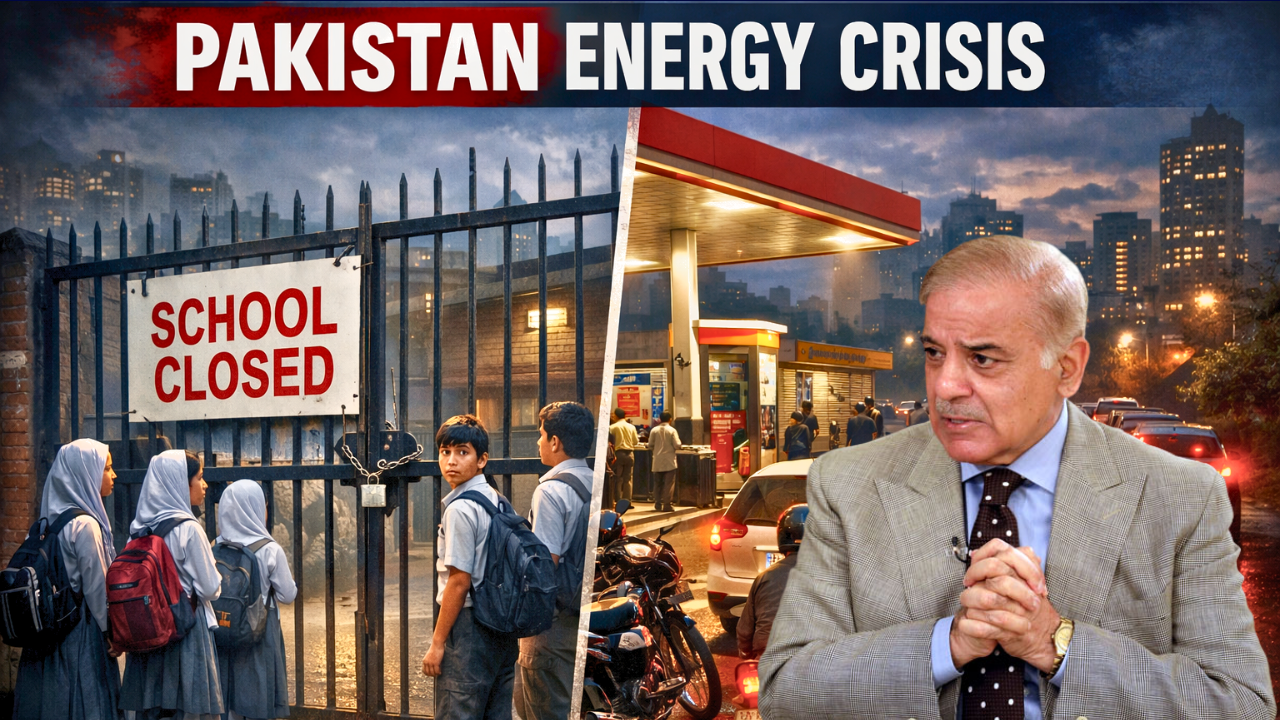
Pakistan Oil Crisis: Pakistan is currently facing a severe energy and oil crisis that has forced the government to take extraordinary measures to conserve fuel and electricity.
In response to the worsening shortage, authorities have announced a two-week closure of schools across the country and decided that government offices will operate only four days a week.
The decisions highlight the seriousness of Pakistan’s ongoing economic and energy challenges, which are linked to declining foreign exchange reserves, rising global fuel prices, and the country’s heavy dependence on imported energy.
Schools Closed for Two Weeks to Save Energy
As part of a nationwide energy conservation initiative, the Pakistani government has announced that schools will remain closed for two weeks.
Officials say the move is intended to reduce electricity consumption and cut fuel usage associated with transportation and school operations.
According to reports, the decision was taken in coordination with the Ministry of Education and provincial governments.
However, the measure is expected to affect millions of students, and experts warn that prolonged closures could disrupt the academic calendar if the energy crisis continues.
Government Offices to Operate Four Days a Week
Along with school closures, the government has also revised the working schedule for public sector offices.
Under the new policy, government offices will remain open only four days a week instead of the usual five.
Authorities say the move is aimed at:
-
Reducing fuel consumption by limiting the use of official vehicles
-
Lowering electricity demand in government buildings
Energy officials say these steps are temporary but necessary to manage the country’s limited fuel supplies during the crisis.
Why Pakistan Is Facing an Oil and Energy Crisis
Experts point to several factors behind Pakistan’s growing fuel shortage.
1. Declining Foreign Exchange Reserves
Pakistan’s foreign currency reserves have dropped significantly, making it difficult for the country to import sufficient quantities of oil and gas.
As an economy heavily dependent on energy imports, Pakistan relies on international markets to meet a large portion of its domestic fuel demand.
2. Global Oil Price Volatility
Fluctuations in global oil prices, often influenced by geopolitical tensions and supply disruptions, have made fuel imports more expensive.
Countries with weaker currencies and economic challenges, like Pakistan, are particularly vulnerable to such changes.
3. Ongoing Economic Struggles
Pakistan’s economy has been facing multiple challenges, including:
-
High public debt
-
Rising inflation
-
Slow economic growth
These issues have limited the government’s ability to maintain stable energy supplies.
Earlier Energy-Saving Measures
The latest steps are part of a broader effort by the government to control energy consumption.
In recent years, authorities have already introduced several conservation measures, such as:
-
Ordering markets and shopping malls to close earlier in the evening
-
Restricting operating hours for wedding halls and restaurants
-
Launching nationwide electricity-saving campaigns
However, the current situation appears to be more severe, forcing the government to adopt stricter policies.
Impact on Daily Life and the Economy
The deepening energy crisis is beginning to affect everyday life across Pakistan.
Experts warn that if the situation does not improve soon, the consequences could spread across several sectors.
Possible impacts include:
-
Rising petrol and diesel prices
-
Increased electricity outages
-
Disruptions in transportation and industrial activity
-
Challenges for the education system due to school closures
For ordinary citizens, the crisis could lead to higher living costs and increased economic pressure.
Experts Call for Structural Reforms
Economic analysts say Pakistan may need financial assistance from international institutions such as the International Monetary Fund (IMF) to stabilize its economy.
Experts also emphasize the importance of long-term reforms, including:
-
Reducing dependence on imported fuel
-
Expanding renewable energy sources
-
Increasing domestic energy production
Such steps could help prevent similar crises in the future.
Pakistan Oil Crisis: The decision to close schools temporarily and reduce the working days of government offices shows how serious Pakistan’s energy crisis has become.
While these measures may provide short-term relief, analysts believe the country will need broader economic and energy reforms to ensure long-term stability.
How Pakistan manages the current shortage—and whether international financial support arrives in time—could play a crucial role in determining the country’s economic outlook in the coming months.
About the Author



1 thought on “Pakistan Oil Crisis: Schools Shut for Two Weeks as Energy Shortage Worsens”