
Impact of Middle East War on India: A war happening thousands of kilometers away can still affect people’s daily lives in another country. The ongoing tensions and conflict in the Middle East are now beginning to show their impact in India as well.
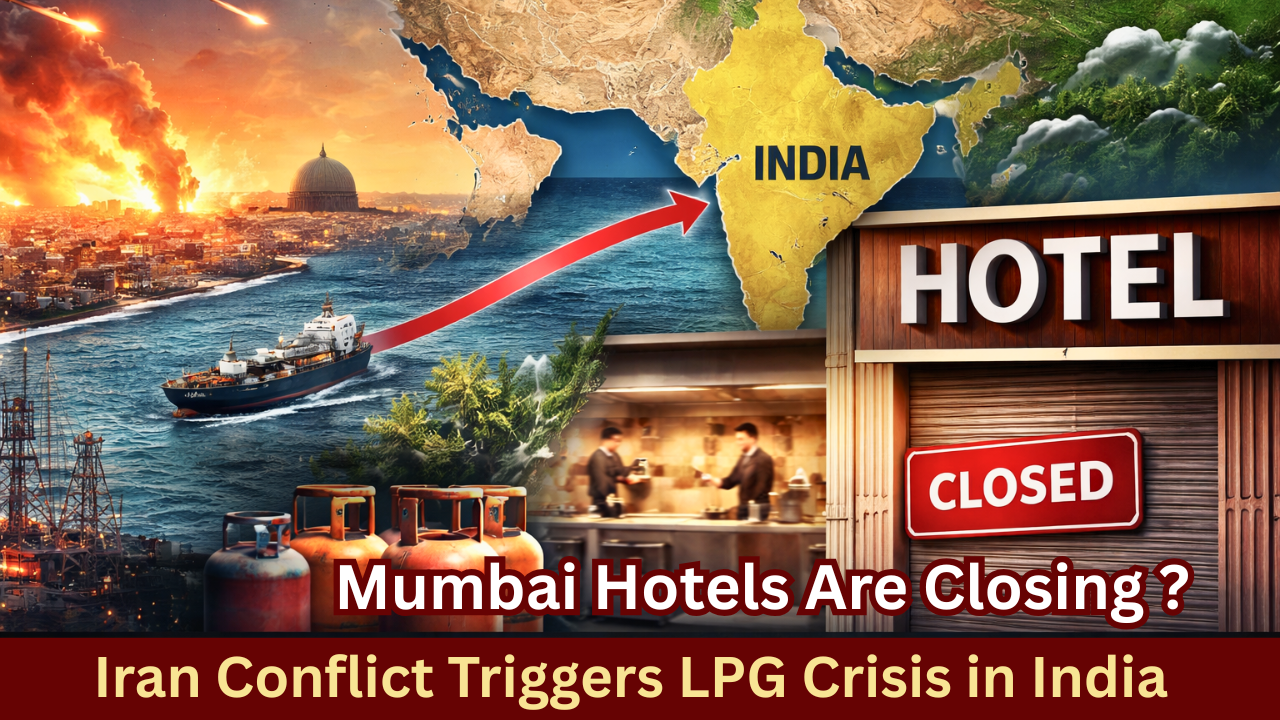
Reports from Mumbai suggest that several hotels and restaurants have started shutting down or reducing operations due to a shortage of commercial LPG cylinders. The hospitality industry says the situation could worsen if the gas supply does not improve soon.
This raises an important question: how can a conflict in the Middle East lead to hotel closures in Mumbai?
And more broadly, how do global conflicts affect India’s economy and supply chains?
To understand this situation, it is important to look at global energy supply routes, international trade dependencies, and India’s reliance on energy imports.
Why Are Hotels in Mumbai Closing?
According to media reports, around 15–20 percent of hotels and restaurants in Mumbai have temporarily shut down or reduced their services due to a shortage of commercial LPG cylinders.
Restaurant and hotel associations warn that if the supply crisis continues, up to 40–50 percent of hospitality businesses could face operational disruptions.
Most hotel kitchens rely heavily on LPG cylinders for cooking. When supply becomes irregular or unavailable, restaurants and hotels struggle to operate normally.
India’s Energy Needs and Import Dependence
India is one of the world’s fastest-growing economies and one of the largest energy consumers.
However, a significant portion of India’s energy requirements is fulfilled through imports.
Key statistics include:
-
India imports around 85% of its crude oil requirements
-
A large share of LPG and natural gas also comes from overseas
-
More than 60% of India’s oil imports originate from the Middle East
Major suppliers include:
-
Saudi Arabia
-
Iraq
-
United Arab Emirates (UAE)
-
Kuwait
-
Qatar
This means any instability in the Middle East can directly affect India’s energy supply and prices.
Why the Strait of Hormuz Is Crucial
A large portion of oil and gas from the Middle East travels through a narrow but extremely important maritime route known as the Strait of Hormuz.
It is considered one of the most critical energy trade routes in the world.
According to the International Energy Agency (IEA) and the U.S. Energy Information Administration (EIA):
-
Nearly 20% of the world’s oil supply passes through this route
-
Around 20 million barrels of oil move through it every day
If military tensions or conflict escalate in this region:
-
Shipping routes become risky
-
Insurance and transportation costs increase
-
Oil and gas prices rise globally
These developments eventually affect economies around the world, including India.
Why the Hospitality Industry Is Hit First
When gas supply becomes limited, governments usually prioritize domestic consumers.
This means:
-
Household LPG cylinders are supplied first
-
Industrial and commercial sectors receive the remaining supply
As a result, industries like restaurants, hotels, and small businesses often experience shortages earlier than households.
Does Every War Affect India?
Not every conflict in the world affects India directly.
The impact generally depends on three major factors.
1. Location of the Conflict
If a conflict occurs in energy-rich regions such as the Middle East or Russia, it can disrupt global energy markets.
2. Impact on Energy Supply
If oil and gas prices increase:
-
Transportation becomes expensive
-
Industrial costs rise
-
Inflation increases
3. Disruption of Global Trade Routes
Certain maritime trade routes are critical for global commerce, including:
-
Strait of Hormuz
-
Red Sea shipping lanes
-
Suez Canal
Any disruption in these routes can disturb the global supply chain.
What the Indian Government Says
The Indian government has repeatedly emphasized the importance of energy security.
Union Petroleum Minister Hardeep Singh Puri has stated that India is diversifying its energy sources to reduce dependence on any single region.
According to him:
“India is expanding its crude oil sourcing from multiple countries to ensure energy security and protect the economy from geopolitical disruptions.”
India has also built Strategic Petroleum Reserves (SPR) to store crude oil and ensure supply during emergencies.
Impact of Middle East War on India: The global economy today is deeply interconnected. A geopolitical crisis in one region can quickly ripple across the world.
When conflicts occur in energy-producing regions like the Middle East, the effects are often felt in fuel prices, supply chains, and business operations worldwide.
In simple terms, a war happening thousands of kilometers away can still impact everyday life in India—from rising fuel prices to hotel closures in major cities like Mumbai.
About the Author