

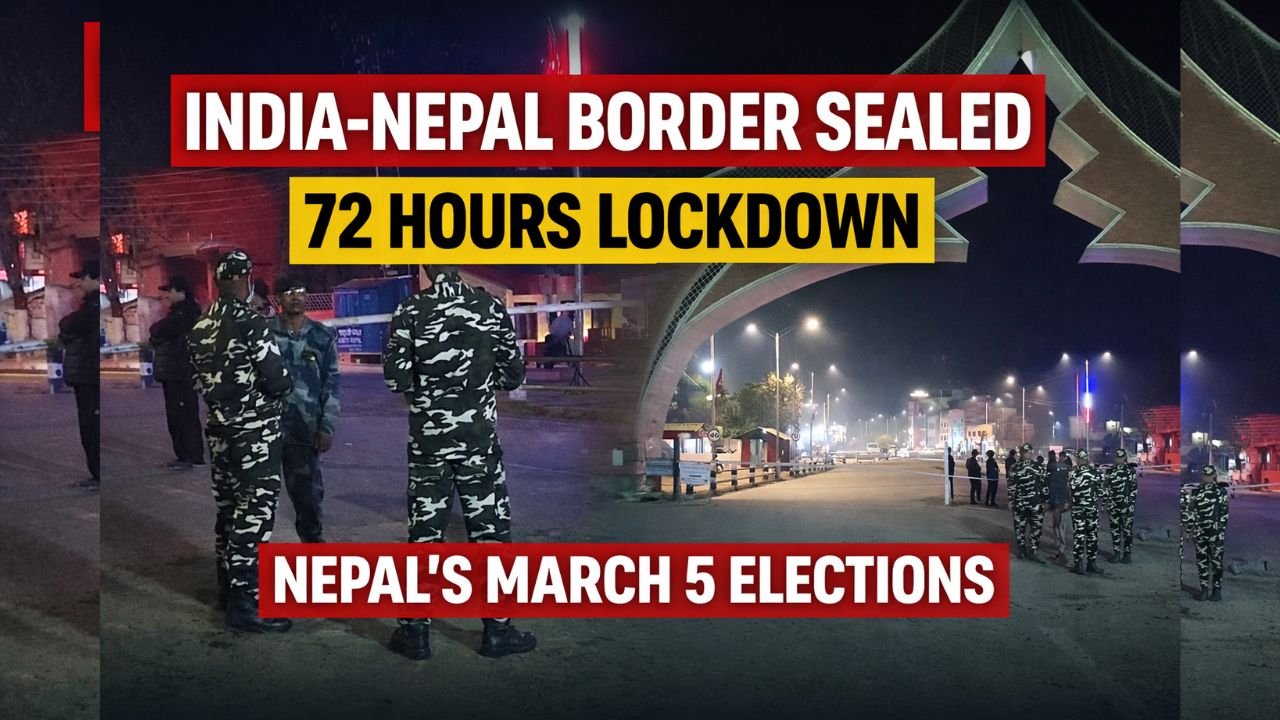
India–Nepal Border Sealed for 72 Hours Ahead of Nepal’s March 5 Elections

India–Nepal Border Sealed for 72 Hours Ahead of Nepal’s March 5 Elections

India–Nepal border: Ahead of Nepal’s parliamentary elections scheduled for March 5, 2026, authorities in both Nepal and India have temporarily sealed the India–Nepal international border for 72 hours as a precautionary security measure.

The border closure came into effect at 12:00 AM on March 2, 2026, and will remain in place until 12:00 AM on March 5, 2026.

The decision was taken following a formal request from Nepali district authorities, including officials from Kanchanpur (Mahendranagar), Nepal, who sought temporary movement restrictions to ensure peaceful, fair, and orderly elections.

Districts on Alert in Uttar Pradesh

In Uttar Pradesh, several border districts have been placed under heightened security. These include:

  • Maharajganj

  • Pilibhit

  • Siddharthnagar

  • Bahraich

  • Shravasti

In Maharajganj, which shares approximately 84 kilometers of open border with Nepal, security forces have intensified patrols. Personnel from the Sashastra Seema Bal (SSB) and local police have been deployed at major checkpoints and sensitive locations.

Officials confirmed that all authorized and unauthorized routes, including small trails and rural crossing points, are under strict surveillance.

Bihar Border Districts Also Under Tight Monitoring

In Bihar, security has been strengthened in key border districts such as:

  • East Champaran (Raxaul)

  • Sitamarhi

  • Madhubani

  • Araria

  • Kishanganj

  • Supaul

Authorities in these regions have restricted cross-border civilian movement, except for emergency and essential services.

Administrative Directives from Indian Authorities

According to local administrative sources, district magistrates (DMs) and senior police officials across border districts have issued directives to:

  • Intensify patrolling

  • Seal informal crossing points

  • Monitor border markets

  • Prevent illegal movement

  • Maintain law and order

In several districts, coordination meetings were held between the District Magistrate (DM), Superintendent of Police (SP), Sub-Divisional Magistrates (SDM), and SSB Commandants to ensure seamless implementation of the order.

Security forces are also using CCTV monitoring at major border entry points.

India–Nepal border: What Movement Is Allowed?

While general public movement has been restricted, authorities have clarified that:

  • Medical emergencies

  • Ambulance services

  • Essential goods transport

  • Government-authorized travel

will continue without interruption.

Why Is Border Sealing Necessary During Elections?

Although India and Nepal share an open-border arrangement allowing visa-free travel for citizens, temporary sealing during elections is a standard practice.

The measure helps prevent:

  • Cross-border political interference

  • Movement of disruptive elements

  • Smuggling of illegal arms or cash

  • Election-related disturbances

Such restrictions have been implemented during previous elections in both countries as well.

Impact on Local Border Areas

India–Nepal border: Border markets, daily wage workers, and small traders may experience temporary inconvenience. However, officials emphasize that the step is necessary to ensure a peaceful democratic process in Nepal.

Security agencies have stated that the border will reopen immediately after the election process concludes and stability is confirmed.

The temporary sealing of the India–Nepal border highlights the strong coordination between both nations in safeguarding democratic processes.

With Nepal heading to the polls on March 5, enhanced vigilance along the border reflects the seriousness with which authorities are approaching election security.
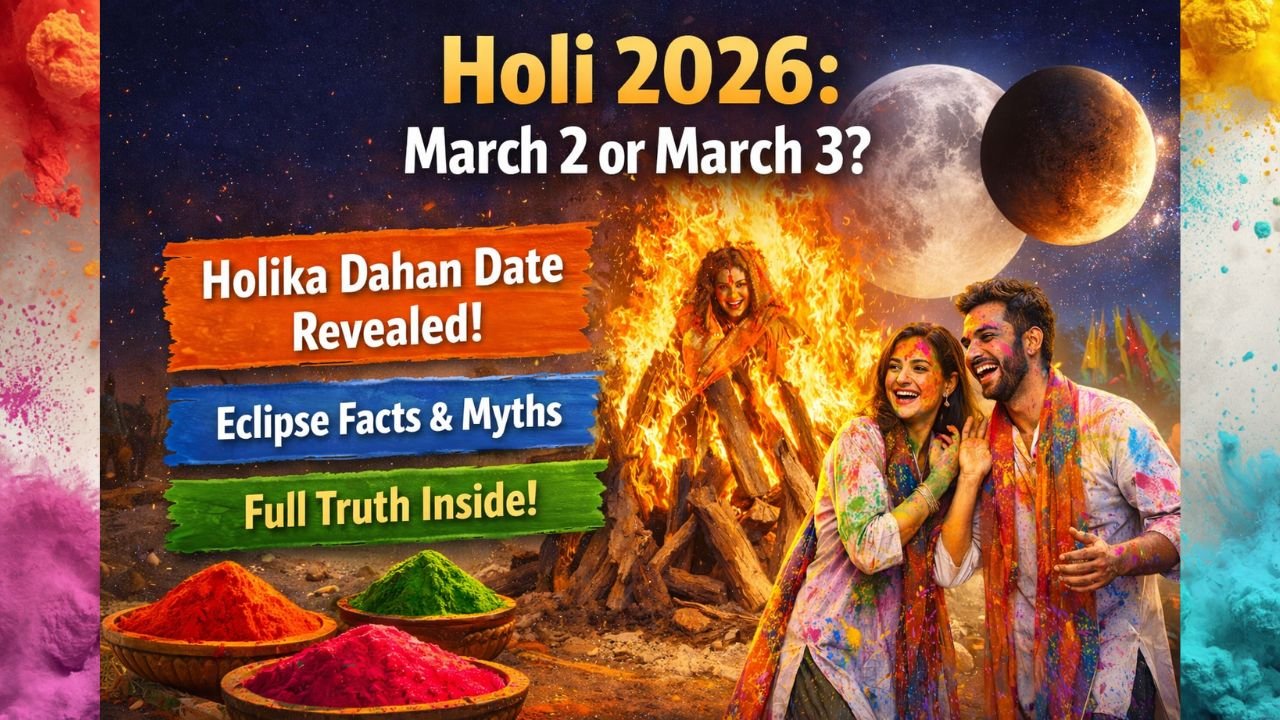
Holi 2026: Is Holika Dahan on March 2 or 3? Panchang Truth, Lunar Eclipse Facts & Correct Date Explained

Holi 2026: Is Holika Dahan on March 2 or 3? Panchang Truth, Lunar Eclipse Facts & Correct Date Explained

The festival of Holi, celebrated on the full moon day (Purnima) of the Hindu month of Phalguna, has become a topic of confusion in 2026. Social media platforms are flooded with claims suggesting Holika Dahan will take place on March 2, March 3, or even March 4. Some posts are even calling it a “grahan wali Holi” (eclipse Holi).

To clear the confusion, here is the complete truth based on Panchang calculations, astronomical data, and traditional Hindu scriptures.

Holi 2026: What Does the Panchang Say?

According to traditional Hindu calendar calculations:

  • Holika Dahan – March 3, 2026 (Tuesday, evening)

  • Rangwali Holi / Dhulendi – March 4, 2026 (Wednesday)

On March 3, 2026, the Phalguna Purnima Tithi will be prevailing during Pradosh Kaal (after sunset). As per scriptural rules, Holika Dahan must be performed during this period.

Therefore, March 3, 2026, is the correct and scripturally valid date for Holika Dahan.

Expected Holika Dahan Muhurat 2026

In most parts of India:

  • Sunset on March 3 will be around 6:00 PM (varies by city)

  • Holika Dahan Muhurat is expected approximately between 6:15 PM and 8:30 PM, subject to Bhadra timing

Important: Holika Dahan must not be performed during Bhadra Kaal. Devotees should check their local Panchang for exact city-wise timings.

Why Do Muhurat Timings Differ?

Timing variations happen because:

  • India spans multiple longitudes

  • Sunrise and sunset vary by location

  • Panchang calculations depend on local sunrise

This may cause a difference of 5–20 minutes between cities.

What Do Hindu Scriptures Say?

Traditional texts such as Dharmasindhu and Nirnaya Sindhu clearly state:

  • Holika Dahan must be performed on Phalguna Purnima

  • It should take place during Pradosh Kaal (after sunset)

  • It must not be performed during Bhadra

In 2026, all these conditions are satisfied on March 3 evening, making it the correct date.

The next day, when Pratipada Tithi begins, Rangwali Holi is celebrated — which falls on March 4, 2026.

Can Holika Dahan Be Done on March 2, 2026?

No.

On March 2 evening, Purnima Tithi will not be available during Pradosh Kaal. Therefore, according to scriptural rules, Holika Dahan cannot be performed on March 2.

Holi 2026 and Lunar Eclipse: What Is the Truth?

Social media claims suggest that an eclipse is affecting the Holi date. Let’s examine the facts.

Lunar Eclipse on March 3, 2026

Astronomical calculations confirm a Penumbral Lunar Eclipse on March 3, 2026.

What Type of Eclipse Is This?

  • It is not a total lunar eclipse

  • It is not a partial lunar eclipse

  • The Moon will pass through Earth’s outer shadow (penumbra)

  • The eclipse will not be clearly visible to the naked eye

Will It Be Visible in India?

As per astronomical data, the eclipse will largely occur during daytime hours in India and will not be prominently visible.

Religiously, penumbral eclipses are generally not treated with strict Sutak rules.

Solar Eclipse in March 2026

A Solar Eclipse will occur on March 9, 2026.

However:

  • It falls several days after Holi

  • It has no connection with Holika Dahan or Rangwali Holi

    Does an Eclipse Change the Holika Dahan Date?

    No.

    Holika Dahan is determined strictly by:

    • Phalguna Purnima Tithi

    • Pradosh Kaal

    • Bhadra status

    Eclipses are not considered a deciding factor for Holika Dahan date calculation.

    Therefore, claims that the date is shifting due to an eclipse are factually incorrect.

    Why Is There So Much Confusion?

    Confusion spreads due to:

    • Tithi changes occurring during daytime

    • Minor differences between regional Panchangs

    • Sensational headlines using the word “eclipse”

    • Rapid spread of unverified social media posts

    Experts advise relying only on authentic Panchang calculations and scriptural guidelines.

    Final Confirmed Dates for Holi 2026

    ✔ Holika Dahan – March 3, 2026 (Tuesday evening)
    ✔ Rangwali Holi / Dhulendi – March 4, 2026 (Wednesday)
    ✘ No scriptural basis for March 2 Holika Dahan
    ✘ Eclipse does not change the Holi date

    Holi is a festival of joy, unity, and positivity. Instead of getting confused by viral claims, it is best to follow authentic calendar calculations and celebrate the festival with clarity and harmony.